
NLA Insights
12 October 2026
Dispute Review Boards are meant to resolve construction disagreements while the project is still being built, before positions harden and a single issue multiplies into a cluster of arbitral claims. This piece examines their role as a pre-arbitration mechanism, their enforceability in India in light of National Highways Authority of India v Pati-Bel (JV), the FIDIC shift from dispute adjudication to dispute avoidance, and what makes a DRB clause work in practice.
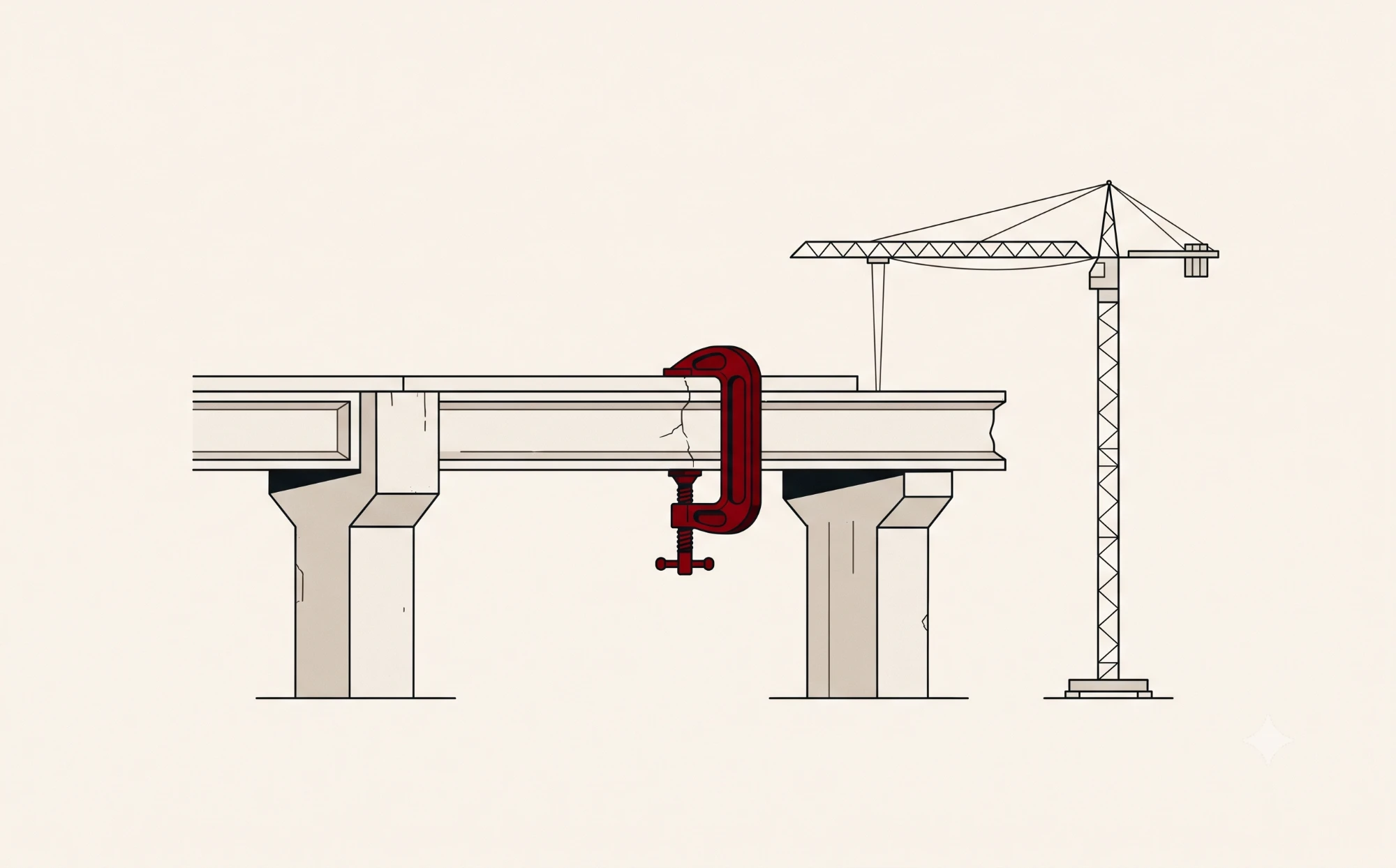
The measure of a dispute board is not whether it stands before arbitration, but whether it resolves disputes early enough that arbitration never becomes necessary.
Construction disputes are disagreements arising between parties to a construction project in relation to matters such as the scope of work, delays, extension of time (“EoT”), variations, payment, measurement, design changes, defects, and the allocation of additional costs and risks. Such disputes may arise between the Employer and Contractor, the Contractor and Engineer, or other participants involved in the execution of the project. By the time these disagreements crystallise into formal arbitration, the underlying issues may have already affected the project’s progress and the parties’ commercial relationship for months, if not years.
It is in this space between the emergence of a disagreement and the commencement of formal dispute resolution that Dispute Review Boards (“DRBs”) are intended to play a critical role. A DRB seeks to address disputes at an early stage, while the project is still ongoing, before positions harden and disagreements become entrenched.
The key advantage of a DRB is its familiarity with the project. Unlike an arbitral tribunal constituted years later, a standing DRB can consider a dispute in light of contemporaneous project records, site conditions, and the actual progress of works. The question, therefore, is not simply whether a DRB exists as a pre-arbitration mechanism, but whether it resolves disputes early enough to prevent them from escalating into lengthy and costly arbitration. It is this temporal advantage that underpins the practical utility of a DRB: not eliminating the possibility of arbitration, but ensuring that a single unresolved issue does not multiply into a cluster of consequential claims.
DRBs are generally constituted early in the project and remain familiar with it throughout execution. Members may undertake periodic site visits, review project records, and interact with the parties, enabling the board to understand the factual and technical background of a dispute contemporaneously, including delays, variations and payment, and facilitating a more informed and expeditious consideration than an arbitral tribunal constituted years after the relevant events.
The DRB’s role as a pre-arbitration mechanism arises from the dispute-resolution procedure incorporated into the construction contract, particularly in standard forms such as FIDIC (International Federation of Consulting Engineers), where disputes must ordinarily be referred to the dispute board before proceeding to arbitration. The DRB thus forms part of a multi-tier dispute-resolution mechanism, moving from negotiation to the dispute board and, if unresolved, to arbitration. Its purpose is not simply another procedural step, but a genuine opportunity for resolution before the parties incur the cost of formal arbitral proceedings.
DRBs also preserve continuity of the project and serve as a filter before arbitration. Construction disputes frequently arise from additional works, delays and requests for extension of time. If left unresolved, such disputes may impede project progress and strain the commercial relationship between the parties. By providing a relatively prompt mechanism for addressing such issues during the execution of the works, DRBs can reduce the risk of disputes becoming entrenched and affecting the project. Where the parties accept the Board’s recommendation, the dispute is resolved without further proceedings. Where the recommendation is not accepted, the DRB process may nevertheless clarify and narrow the issues requiring determination in arbitration. Accordingly, the DRB process does not replace arbitration; it provides an opportunity to resolve the dispute under the contractual mechanism before arbitration is invoked.
A Dispute Review Board (DRB) is essentially a creature of contract. Since the Arbitration and Conciliation Act, 1996 does not prescribe a separate statutory framework governing DRBs, their constitution, powers, timelines, and the legal effect of their recommendations are determined by the terms agreed upon between the parties. This distinguishes India from jurisdictions such as the United Kingdom, where the Housing Grants, Construction and Regeneration Act, 1996 confers a statutory right to refer a construction dispute to adjudication, binding on an interim “pay now, argue later” basis regardless of what the contract says. In India, by contrast, a DRB carries no independent legal force, as it binds the parties only to the extent the contract says it does.
This makes the drafting of the dispute-board clause decisive, as illustrated by the Delhi High Court’s decision in National Highways Authority of India v Pati-Bel (JV). In the said case, Clause 67.1 of the executed agreement between the parties required disputes to be referred, in the first instance, to a three-member DRB, bound to issue its recommendation within 56 days, and the recommendation would bind the parties unless subsequently revised by an arbitral award. The Court held that Clause 67.1 was a classic “multi-tier” clause and, particularly because the DRB’s recommendation was admissible as evidence in any subsequent arbitration, reference to the DRB was a condition precedent to arbitration. This is consistent with the Supreme Court’s earlier recognition, in M.K. Shah Engineers & Contractors v State of Madhya Pradesh, that a step preceding arbitration can be essential where the clause frames it as such. Read together, these decisions confirm that whether a DRB reference is mandatory or merely directory turns on the precise language chosen — a DRB’s authority in India is only as strong as the clause that creates it.
FIDIC’s significance for DRBs lies in how its dispute-board mechanism has evolved. Under the 1999 suite, the principal mechanism was the Dispute Adjudication Board (“DAB”), intended to provide an independent, rapid means of addressing disputes during execution, before arbitration — recognising that construction disputes should, where possible, be addressed while the project remained ongoing rather than left until completion.
The 2017 FIDIC suite developed this through the Dispute Avoidance/Adjudication Board (“DAAB”), a standing board tasked not only with deciding crystallised disputes but with actively helping parties avoid them, including through regular site visits and informal assistance on emerging disagreements. FIDIC’s Golden Principle 5 now requires, subject to the absence of any conflict with governing law, that formal disputes be referred to a DAAB for a provisionally binding decision “as a condition precedent to arbitration”. The shift from DAB to DAAB reflects a broader development in emphasis — from merely determining the parties’ rights after a dispute has arisen to proactively addressing disagreements and facilitating their resolution before they become entrenched.
FIDIC remains relevant to Indian construction disputes because its architecture has influenced the drafting of major infrastructure contracts, particularly public projects. In National Highways Authority of India v Progressive-MVR (JV), the Supreme Court observed that the relevant NHAI tender document was “modelled on generic FIDIC construction contracts.” This does not make FIDIC binding Indian law; it shows how FIDIC-based structures inform Indian infrastructure contracts, situating FIDIC here as a comparative framework rather than an independent source of law.
The practical lesson for Indian construction contracts is not to add procedural layers before arbitration for formality’s sake, but to ensure the first project-level mechanism can address disagreements while they remain capable of resolution.
Where the size and complexity of a project justify it, the dispute board should be constituted early, allowing it to become familiar with the contractual framework, documentation, and site conditions before a dispute arises — a value the 2017 FIDIC suite recognises by making standing boards, rather than ones convened only after a dispute, the default position. This matters particularly in disputes over delay, extension of time, variations, and payment, where the contemporaneous project record can be critical to the eventual determination.
Timing of intervention matters equally: a determination delivered only after an issue has already disrupted construction may provide a legal answer but limited commercial relief. A DRB’s effectiveness therefore depends not merely on its jurisdiction to consider disputes, but on its capacity to address them within a timeframe still meaningful to the ongoing project.
The contractual consequences of the DRB procedure must also be stated clearly. As the Pati-Bel judgment illustrates, the contract should specify the status of the board’s recommendation, the timeframe for it, and the circumstances in which the dispute may proceed to arbitration.
The experience of DRBs in Indian construction contracts suggests their effectiveness depends less on their existence as a pre-arbitration requirement and more on whether they produce a meaningful outcome before arbitration becomes necessary.
The real test is whether the DRB functions as a substantive project-level mechanism or merely a step parties must complete before arbitration. Where the board is constituted early, acts within a prescribed timeframe, and its recommendations carry defined contractual consequences, it can prevent a developing dispute from becoming an arbitral claim. Where these elements are absent, the DRB risks becoming only another procedural stage.
Accordingly, the question is not whether DRBs should precede arbitration, but whether they resolve disputes before arbitration becomes necessary. That should be the measure of their success in Indian construction contracts.
© Nirka Law Advisory. All rights reserved. For queries, connect with us.