
In-depth legal analysis, research, and commentary on issues shaping infrastructure, construction, and energy sectors.
Our reports, articles, and whitepapers examine regulatory developments, contractual risk, and emerging trends affecting complex projects. Each publication is designed to provide structured insight and practical perspective for decision-makers.


7 September 2026
The Delhi High Court holds that a Provisional Completion Certificate, once validly issued, cannot be kept in abeyance where the contract permits only its withholding before issuance, and upholds the lenders’ entitlement to Termination Payment…

31 August 2026
The Allahabad High Court draws a line between contractual GST-computation disputes an arbitrator may decide and statutory tax questions reserved for tax authorities, while curbing awards of penalty and interest on unassessed GST liability…

24 August 2026
Indian construction arbitration is shifting from delay narratives built on correspondence to claims that must be proven through contemporaneous records, causation analysis and credible quantification of loss…

17 August 2026
Clause 25-A(vii) required a contractor to deposit 10% of its claim before it could reach arbitration. Disagreeing with S.K. Jain and preferring ICOMM Tele, a two-judge Bench has referred the validity of such pre-deposit conditions to a larger Bench…

10 August 2026
A change on site becomes a contractual variation only when the contract’s own machinery says so. Reading Somdatt Builders alongside Hindustan Construction Co. and JSC Centrodorstroy, this piece traces when a contractor is entitled to additional compensation — and where that remedy stops…

3 August 2026
The Supreme Court upheld the generator’s entitlement to Change in Law compensation from 25 August 2014 following cancellation of its captive coal block, but held that the additional cost of e-auction and imported coal before that date remained with the generator under the PPA’s own risk allocation…

27 July 2026
The Supreme Court describes judicial scrutiny of an arbitral award as a “narrowing pyramid”: the higher the court, the lower its propensity to interfere. As a challenge travels from Section 34 to Section 37 and on to Article 136, the threshold for interference rises at every stage, protecting party autonomy, finality and commercial certainty…

20 July 2026
The Supreme Court holds that a technical collaborator who was not a signatory to the main contract could nevertheless invoke its arbitration clause, having assumed joint and several obligations under a deed of joint undertaking. Non-signatories may, in appropriate cases, be treated as veritable parties to an arbitration agreement based on the contractual documents and the parties’ conduct…

13 July 2026
The Delhi High Court dismisses cross-petitions under Section 34 and upholds a majority arbitral award in a highway concession dispute between Atlanta Infra Assets Limited and NHAI. Reaffirming that Section 34 proceedings are not appellate in nature, the Court declined to reappreciate evidence or substitute its own view where the tribunal’s findings on contractual timelines, the grant of interest and the assessment of nominal damages were plausible, reasoned and rooted in the contractual framework…

6 July 2026
The Supreme Court holds that where a Section 33 application for correction or an additional award has been formally filed and entertained, limitation for challenging the award under Section 34 runs from the date that request is disposed of — not from the date of the original award. The Court cautioned that sham or mala fide Section 33 applications filed only to defeat limitation may invite exemplary or punitive costs…
1 July 2026
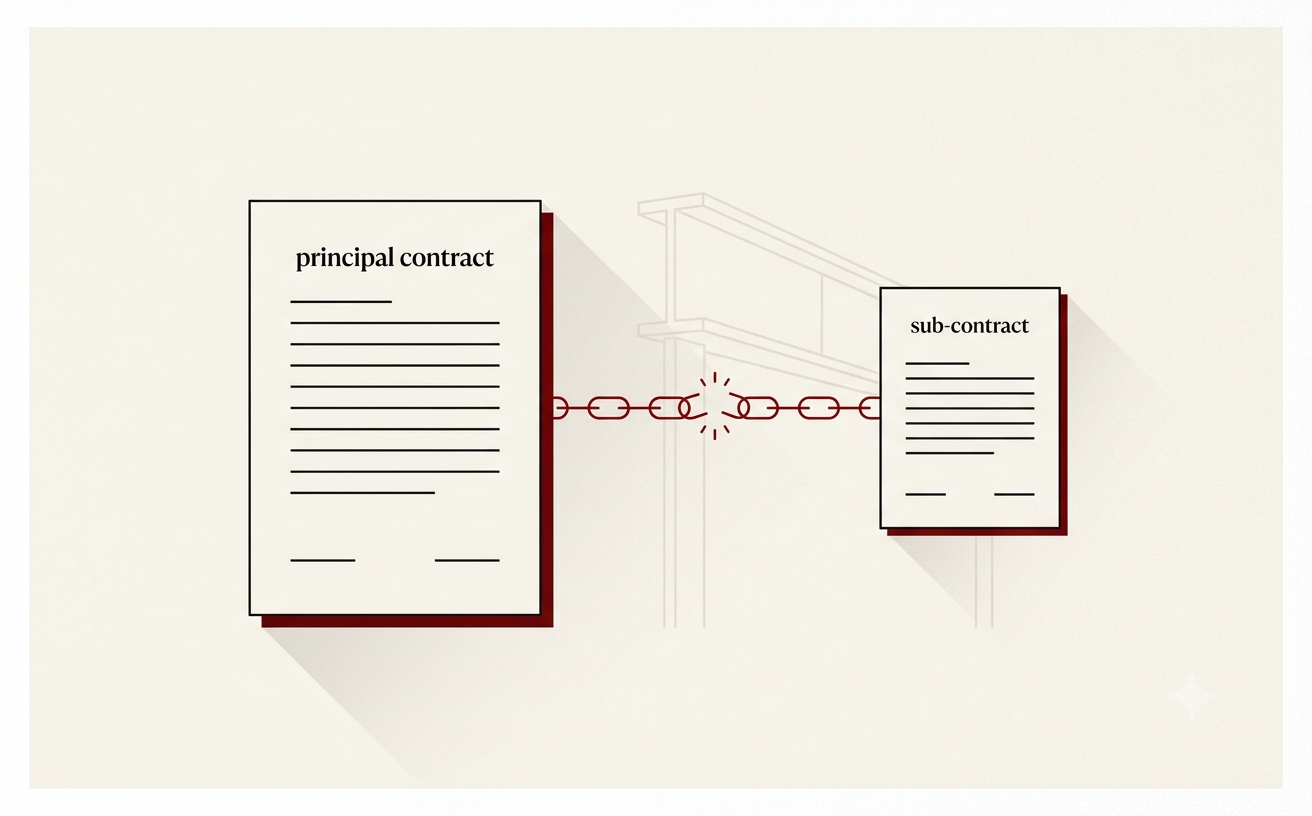
The Gauhati High Court holds that an arbitration clause in a principal contract is not incorporated into a sub-contract by a mere general reference, particularly where the sub-contract already provides its own dispute resolution mechanism. Arbitration rests on clear and specific consent, and a clause providing only for mutual discussion cannot be read as an agreement to arbitrate…

June 2026
The NCLT holds that disputes involving corporate governance, oppression, and mismanagement under Sections 241-242 of the Companies Act, 2013, involve rights in rem and cannot be referred to arbitration, even where broad arbitration clauses exist between the parties. The Tribunal reiterated that the statutory remedy against oppression and mismanagement is a right vested in the NCLT by the Companies Act, and that such jurisdiction cannot be ousted by private agreement. However widely worded an arbitration clause may be, disputes concerning corporate governance and the affairs of a company must be adjudicated by the Tribunal and are not capable of reference to a private arbitral forum…
December 2025
The Supreme Court holds that the mere use of the word “arbitration” in a dispute resolution clause is insufficient to constitute a binding arbitration agreement under Section 7 of the Arbitration Act — a multi-tier negotiation clause cannot be treated as an arbitration clause unless it reflects unequivocal intent to submit disputes to binding adjudication. Examining the clause as a whole, the Court held that a mechanism contemplating negotiation between the parties’ representatives, followed by recourse to the civil courts, lacked the essential attributes of arbitration — a neutral tribunal, an adjudicatory process and a binding, final decision. Substance prevails over form, and the label cannot supply an intention to arbitrate that the contract does not otherwise disclose…
November 2025
The Bombay High Court holds that enforcement of a mortgage is non-arbitrable despite arbitration clauses in the loan and mortgage agreements. Reaffirming that mortgage-enforcement actions determine rights in rem, the Court held that such disputes require adjudication before a public forum and cannot be relegated to a private arbitral tribunal whose award binds only the parties before it…
October 2025
The Delhi High Court enforces ICC foreign awards despite objections on jurisdiction and public policy, reaffirming India’s pro-enforcement stance. The Court held that a challenge under Section 48 does not permit a review of the merits of the award, and that the narrow public-policy exception cannot be used to reopen the tribunal’s findings…
September 2025
The Supreme Court clarifies the limits on non-signatory participation in arbitral proceedings, addressing whether non-signatories may attend hearings and whether courts retain jurisdiction once an arbitrator has been appointed under Section 11(6). The Court emphasised that, after appointment, procedural questions fall within the tribunal’s domain and judicial intervention must remain minimal…
August 2025
The Delhi High Court emphasises the mandatory disclosure obligations of arbitrators in international proceedings, underlining the need for judicial oversight where impartiality is compromised. The Court held that an arbitrator’s failure to disclose prior professional relationships undermines the fairness of the process and can justify intervention…
July 2025
The Calcutta High Court examines the intersection between interim protection under Section 9 of the Arbitration Act and proceedings under the SARFAESI Act. Clarifying the scope of each regime, the Court explained how interim arbitral relief operates where secured financial assets are simultaneously subject to enforcement by a secured creditor…
June 2025
The Supreme Court holds that a discharge voucher signed under financial duress does not extinguish arbitrable claims where economic coercion is credibly pleaded. Allowing the insured to proceed to arbitration despite having accepted a settlement under protest, the Court held that a full-and-final settlement obtained through coercion cannot bar the reference of genuine disputes…
May 2025
A Constitution Bench of the Supreme Court clarifies the permissible scope of judicial intervention in arbitral awards, resolving conflicting precedents on whether courts may modify awards under Sections 34 and 37 of the Arbitration Act or Article 142 of the Constitution. The Court delineated the narrow limits within which an award may be interfered with, reaffirming the primacy of the arbitral process…
April 2025
The Supreme Court clarifies the law governing an arbitration agreement in the absence of an express choice, applying the three-step test to hold that the presumptive governing law follows the law of the main contract. The Court further held that Indian courts retain jurisdiction notwithstanding a foreign seat, where the substantive contract is governed by Indian law…
March 2025
The Supreme Court holds that an oral undertaking imposing joint and several liability falls within the scope of an arbitration clause, binding a non-signatory through equitable estoppel. The Court reasoned that a party cannot accept the benefits of a contract while disowning the obligation to arbitrate disputes arising from it…
February 2025
The Supreme Court raises concerns over the stringent application of limitation laws in arbitration, calling for legislative intervention to clarify ambiguities in the Act. The Court cautioned that an unduly rigid approach to limitation risks defeating legitimate claims and undermining arbitration as an effective dispute resolution mechanism…
January 2025
The Supreme Court holds that an arbitration clause requiring mutual consent for the appointment of an arbitrator cannot be treated as merely optional. Where disputes arise, invocation of arbitration is mandatory, and the clause must be read holistically and harmoniously so as to preserve rather than defeat its enforceability…
December 2024
The Delhi High Court rules that an arbitral tribunal exceeds its jurisdiction by striking off a party’s defence for non-payment of arbitral fees. The Court held that such a punitive measure finds no sanction in the Arbitration and Conciliation Act, 1996, and that a tribunal’s remedies for unpaid fees lie elsewhere…
November 2024
The Delhi High Court affirms that arbitration may proceed despite parallel civil proceedings, holding that the mere filing of a civil suit does not extinguish the right to arbitrate. Absent a clear and intentional abandonment of the arbitration agreement, the parties remain bound to refer their disputes to arbitration…
October 2024
The Supreme Court holds that an appellate court cannot set aside a tribunal’s award merely because it takes a different or ‘better’ view of the evidence. An award may be interfered with only where it violates substantive law, the Arbitration Act, or the terms of the agreement, and not on a reappraisal of the merits…
September 2024
The Delhi High Court deems an arbitration clause invalid where a contractor is compelled to select an arbitrator from a panel drawn up by the respondent. Such a clause permitting effectively unilateral appointment is incompatible with Section 12(5) of the Arbitration and Conciliation Act, 1996, which safeguards the independence and impartiality of the tribunal…
August 2024
The Supreme Court clarifies the limits of judicial scrutiny at the referral stage under Section 11(6), holding that referral courts must not undertake a detailed evidentiary inquiry into whether the claims are time-barred. That determination belongs to the arbitral tribunal, and the referral court’s role is confined to the existence of an arbitration agreement…
July 2024
The Delhi High Court holds that Section 29A of the Arbitration Act does not bar the consideration of an extension application filed after the expiry of the arbitrator’s mandate. Emphasising the legislative intent, the Court held that the mandate may be extended even after the specified period has lapsed, provided sufficient cause is shown…
June 2024
The Delhi High Court underscores that a petitioner must demonstrate both a valid arbitration agreement and an arbitrable dispute before a referral will be made under Section 11(6). The Court held that referral is not a mechanical exercise and that it must apply its mind to these core preliminary questions…
May 2024
The Supreme Court exercises its curative jurisdiction to relieve DMRC of a liability of approximately Rs 8,000 crores, setting aside its 2021 judgment that had restored a patently illegal arbitral award against a public utility. The Bench characterised the earlier outcome as a grave miscarriage of justice warranting the rare exercise of curative power…
April 2024
The Delhi High Court holds that an arbitration clause permitting only one party to appoint an arbitrator from its own panel is void. The Court terminated the impugned mandate and appointed a new independent arbitrator, reaffirming that unilateral control over the constitution of the tribunal offends the requirement of neutrality…
March 2024
The Delhi High Court rules that designating a seat of arbitration operates akin to an exclusive jurisdiction clause, requiring all Section 11, Section 9 and Section 34 proceedings to be filed before the seat court. Any other interpretation, the Court held, would undermine party autonomy and dilute the significance of the chosen neutral venue…
February 2024
The Supreme Court reaffirms that courts have no power to modify arbitral awards while adjudicating petitions under Sections 34 and 37 of the Arbitration and Conciliation Act, 1996. An award may be set aside on specific statutory grounds, but it cannot be adjusted or rewritten by the court to substitute its own view…
January 2024
The Supreme Court holds that an arbitration clause requiring mutual consent for the appointment of an arbitrator cannot be treated as optional. Where disputes arise, invocation of arbitration is mandatory, and the clause must be interpreted holistically to preserve its enforceability…
Discuss how our research applies to your legal or project requirements.